
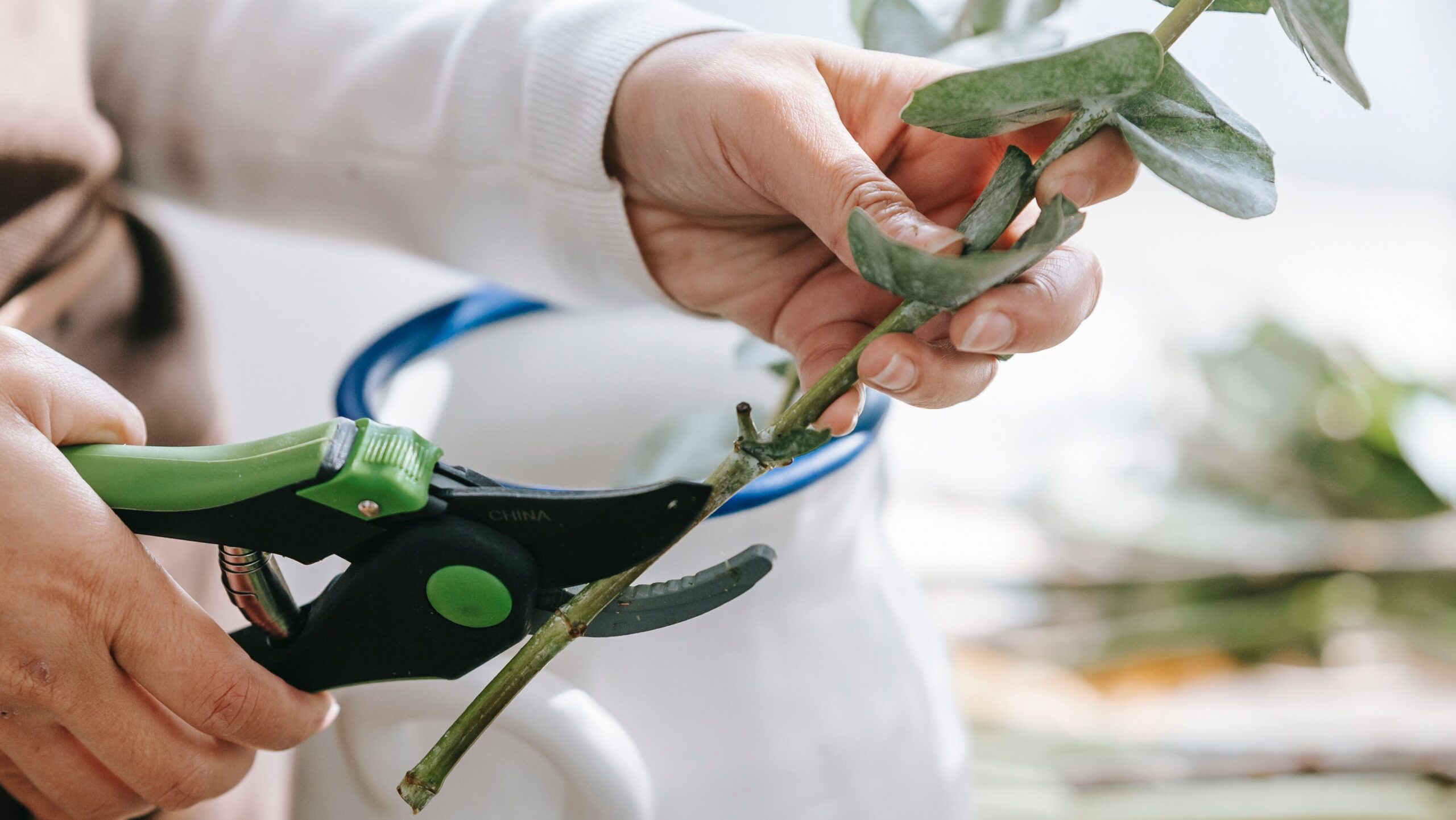
How To Propagate, or Clone, Deciduous Plants with Hardwood Cuttings
We have briefly gone over hardwood cuttings before – now, there is more to know about this propagation method for deciduous plants. Before you get started on your propagation project on deciduous plants, you should wait until Mother Earth has gone dormant. That means your area should have a good freeze – the temperature should go below 32 degrees Fahrenheit (0 degrees Celsius) for at least a few hours.
There are two methods for taking hardwood cuttings. Both have proven to be effective – yet there is a chance of success or failure with both techniques. So which one to choose? Several factors should be considered – such as the plant species you are rooting, environmental conditions, and even the soil in your yard. Some experimenting is the only way to find out which method works best for you and your plants.
Deciduous Propagation Method Number One
Hardwood cuttings can be taken from most deciduous shrubs. However, taking them from some plant species is easier than others. You can learn more about propagating a specific variety of plants over here. When it comes to deciduous plants, you can propagate them both with hardwood or softwood cuttings. Tip cuttings from the newest growth at the end of the branch are taken for softwood cuttings, leaving you with one cutting per branch. You can take several cuttings from that same branch for hardwood cuttings.
So, if a plant grows around 4 feet in a season, as Forsythia does, you could use that entire length for your cuttings. A grower could potentially get up to 8 cuttings from one single branch. However, some varieties of plants require significantly longer cuttings, such as grapevines. An average cutting of grapevine is around 12 inches compared to the average 6 inches recommended for most plant varieties. That is because of the wider internodal spacing of grapevine plants.
It is important to remember that hardwood cuttings have to be cut during the winter season. That is because, during colder months, plants are dormant, meaning inactive. Cuttings are ready to be taken as soon as after the first nice freeze. It is always a good idea to find a protected area for working if the weather is extreme – for example, your basement or garage.
So, how exactly do you take hardwood cuttings from a deciduous plant? The process is really simple and suitable for even gardening beginners and amateurs. You need to collect some branches from the parent plant and snap or cut them into cuttings around 6 inches long.
The branches should not have any leaves left on them since the plant is dormant at the time of collecting them. When having a close look at the canes, you should be able to see little bumps along them. Those bumps are bud unions, also called nodes. They are the following year’s leaf buds. When taking your cuttings, make the first cut just below a node, at the butt end of the cutting. The second cut should be ¾ inch above the top node.
There are two reasons for making your cuttings in the method described above. It makes it easy to tell which end of the cutting is the top part and which one is the bottom. More importantly, it has several benefits for the cutting itself. When you cut a plant above a node, the balance of the stem above that node will die back to where the top node is. The ½ inch stem below the bottom node planted into your potting mix would die off. And dead wood rotting in your rooting media would be the perfect place for insects and diseases – trust us, you want to avoid that.
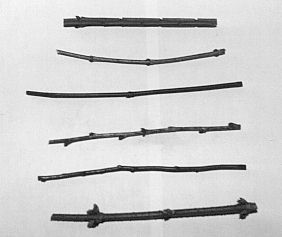
Here you can see a few samples of hardwood cuttings from a Burning Bush, a Red Twig Dogwood, a Rose of Sharon, and a Purple Sandcherry. made by Mike McGroarty of FreePlants.com. The bottom parts of the cuttings are on the right side of the photo – you can see how the cuttings have been cut just below the nodes.
There is another reason why you should cut right below a node. Did you know that it can be helpful to slightly injure a plant when you are propagating it? An injury to a plant results in callous developing over the wound to offer a layer of protection. The same thing happens when a branch is cut below its node. The build-up of callous is needed for roots to develop.
We know why the first cut should be made below a node, but why does the second cut have to be ¾ inch above the node? The simple answer is protection – leaving a short stem above the node offers protection for the node. It also makes it easier for you to handle and plant the cutting – use the stem as a sort of handle to avoid damaging the bud. Another tip to remember is to make the second cut at a 45-degree angle. There is a simple reason behind that – it helps to shed water away from the cutting, which in return helps avoid any diseases developing.
Give it a read

Once you have your cuttings, you will need a rooting agent. There is a wide variety of different rooting compounds available in every garden center. Ensure that the rooting agent or gel you opt for is specifically formulated for hardwood cuttings.
When you have your rooting agent picked out and your cuttings ready, the cuttings can be dipped into the agent and planted. Line your cuttings up with the butt ends on the same side, and tamp them together – you want the ends to be even.
Then it is time to take the bundle of cuttings outside and dig a hole for them. The hole should be around 10 inches deep and wide enough for all of your cuttings. The cuttings should be put in the hole upside down with the bottoms of the cuttings pointing toward the sky. The ends of the cuttings should stay around 3 inches below the soil. Fill the hole back in with soil, and mark the location. You want to be able to find the cuttings next spring. Always pick a spot that gets a lot of sun for your cuttings.
During the winter, the cuttings develop callouses and possibly even roots. Since the butts of the cuttings are close to the soil surface, they get more warmth from the sun, which creates better conditions for root development. That explains why the cuttings should be buried upside down. Additionally, it helps to prevent top growth, which isn’t beneficial to the plant at this stage.
Once the cuttings are buried in the soil, leave them alone until mid-spring – you don’t want to check on them when the ground is frosty. Frost can considerately damage the fragile buds that have started to develop over the winter. Wait with the digging until early spring frosts have passed – in this way, you won’t ruin all the progress the cuttings have made.
Once you are sure that the last freeze has passed, you can dig up the cuttings bundle. Remember, the buds are a bit fragile, so be gentle. You’ll want to have a look at the butt ends of the cuttings. In the best-case scenario, you will see some callous build-up. That indicates that the propagation project is going successfully. But don’t lose hope if you don’t see any callous build-up – you can still plant the cuttings!
A narrow ditch works best for hardwood cuttings and is simple enough to dig. Alternatively, you can use the help of a spade to slice up the ground and then use a prying motion to enhance it. While the cuttings were in the ground upside down over the winter, ensure you plant them upright this time, with the butt ends down. Bury half of the cutting and leave a few buds above the soil surface. Fill in the ditch with soil – to avoid any air pockets in your soil, give it a light tamp.
Plant your cuttings in a sunny spot with rich soil, and ensure it’s well drained. Hardwood cuttings don’t need a special kind of bed of sand. Don’t forget to water them regularly but do not get too carried away. Too much water can kill your cuttings.
Keep an eye on your cuttings, and after a few weeks, some leaves should appear. As the cuttings are growing leaves, they are also developing roots. Don’t freak out when you see a few cuttings dying off, as the developing roots generally cannot support the whole cutting bundle. But the cuttings that survive should be well rooted by autumn time. And again, the plant should get replanted – you can either do it once the plant has gone dormant or wait until spring. If you opted for spring, ensure the transplantation gets done before the plant comes out of dormancy.
Deciduous Propagation Method Number Two
The above method of propagating deciduous plants by hardwood cuttings isn’t the only way to go about it. There is another way to do it, and it is quite similar to the first method. However, it skips the step of burying your cuttings over the winter season.
So, how exactly do you handle hardwood cuttings when you want to try this second technique? You take the cuttings the same way as you would if you were following the first method. But instead of burying them under the soil and letting them stay there over the winter, we skip this step and move right to planting them.
Just as we recommended using a rooting agent for the cuttings before, we do it again. A rooting agent helps to promote root growth. Once you have treated the cuttings with your rooting gel, plant the cuttings exactly as you would using the first propagation method.